Cilacap — In many villages, goats are more than just livestock. They often serve as a lifeline when family needs arise suddenly. This image is now resurfacing in Kewasen Hamlet, Karangkandri Village, Cilacap Regency. Slowly, residents are strengthening their economy through goat farming, after receiving support from the PT Sumber Segara Primadaya (S2P) CSR program.
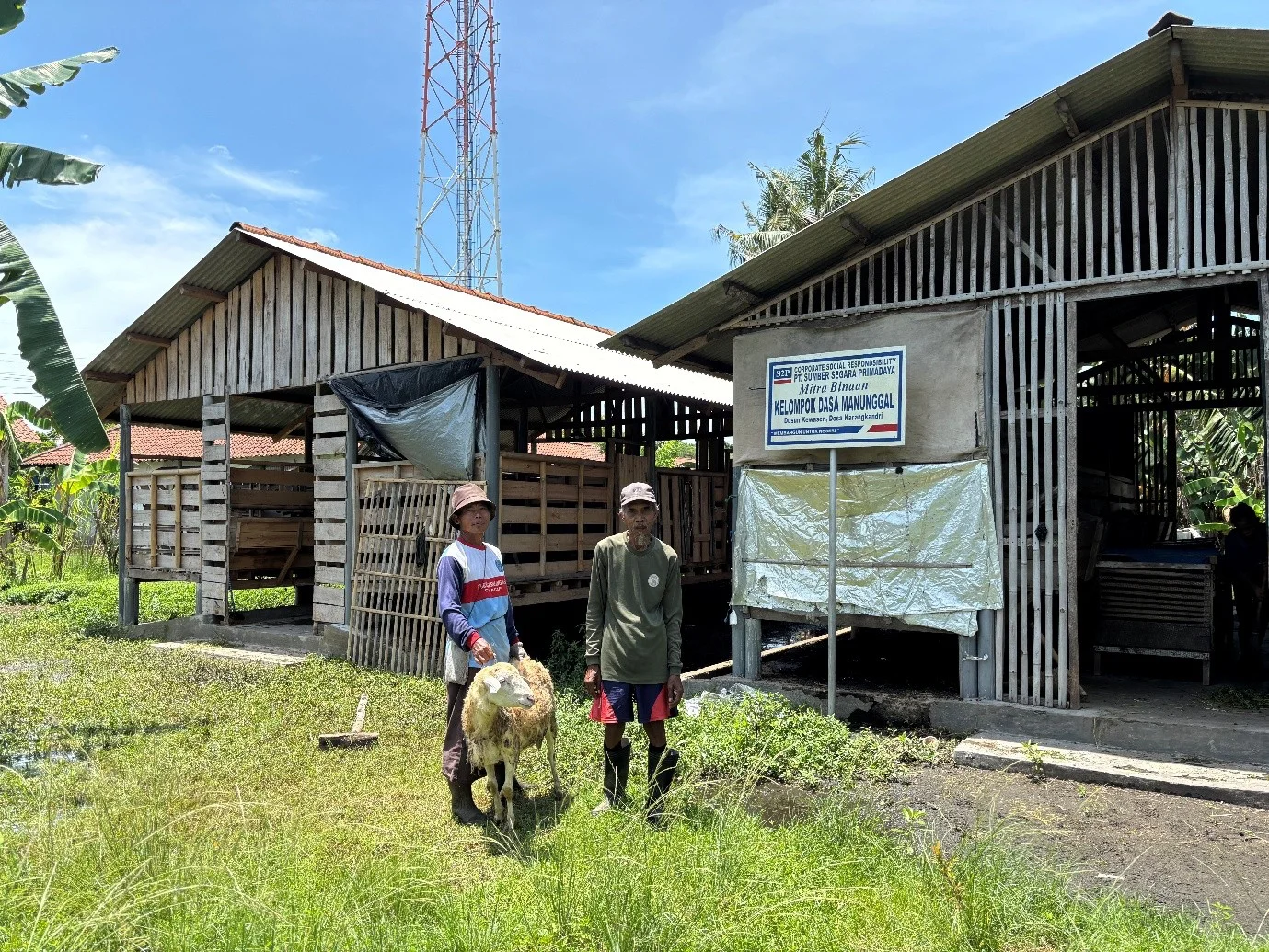
The story begins with mapping the village's potential. While observing field conditions, the S2P CSR team saw that the community had experience raising livestock and lived in an environment rich in natural forage. This potential was then focused on establishing the Dasa Manunggal Livestock Group, a new forum for residents who want to build a collective livestock business.
S2P's CSR Assistant Manager, Eko Heriyanto, explained that the program's beneficiary selection process was carried out carefully, considering residents with livestock farming experience, an interest in goat farming, and a residence in the company's assisted area. As a form of support, in 2015, PT S2P built a communal pen and provided 43 breeding goats so that livestock activities could be managed collectively and be more productive.
After 10 years, the livestock development program has shown very positive results. Despite some member turnover, the group remains strong with a membership of five members. The livestock group has successfully sold 326 goats from its farms and retains 45 as productive assets. This achievement confirms that the livestock farmer empowerment process through the S2P development program is effective and sustainable.
For S2P, building livestock farms means building community confidence. Therefore, once basic facilities are in place, the company strengthens the groups' capabilities with training in barn management, livestock health, and feed processing. Eko emphasized that livestock waste is also seen as having economic value.
However, the journey to independence is certainly not without challenges. Changing seasons mean natural feed is not always available, and the risk of animal disease must be seriously managed. This is where the company introduced simple innovations such as silage, a fermented feed that can last for months. This method opens up new ways for groups to maintain business stability.
S2P's mentoring doesn't stop at livestock farming techniques. Group discipline, financial record keeping, and business management are also strengthened.
"Going forward, PT S2P plans to encourage its fostered livestock groups to become modern, independent and competitive livestock farmers. This effort is carried out by increasing the capacity of members through training in simple technology-based livestock management, feed management, animal health, and business financial record keeping," he explained.
He continued, adding that S2P also plans to integrate this program with organic fertilizer processing from livestock waste, thus creating a sustainable and environmentally friendly livestock system.

The program received a warm welcome from the community. Karsep, one of the participants, felt a real change in his life.
"After participating in the program, there have been changes, especially in terms of ownership of productive assets. The goats I raise have become a source of long-term hope, and I've gained new knowledge about animal husbandry," he said.
Meanwhile, another participant, Jatmiko, felt the benefits even more quickly than he imagined. The livestock helps cover his children's school fees and daily needs.
"I hope this program can continue, the group grows, and the benefits expand to other neighborhoods. Hopefully, we can establish a fertilizer business and develop a market so that the group members' incomes become more stable," he concluded.
From a communal pen in Karangkandri, a new chapter in the village economy is being written. Goat farming is no longer just a routine, but a path to independence. With S2P's support, this livestock group is slowly developing a more modern, scalable, and hopeful business model for the future of its families.